|
|
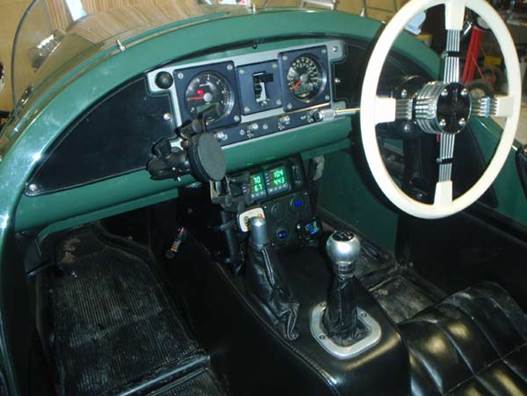
New extra M3W Dashboard Chapter
ENGINE sensors
For the engine sensors I used the
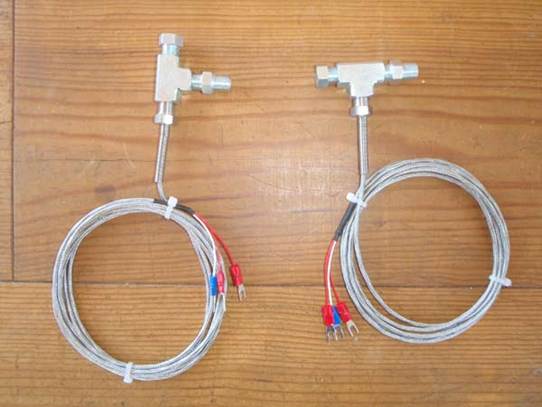
following parts 2 x CHT From Auber US for SYL-2831 ( TC-KCHT14 ) : each
US$ 35 1 x Engine oil water temp sensor ( galvanic free )
from AUBER-US ( PT100A-NPT ) : each US$ 28.5 1 x Engine oil pressure sensor ( galvanic free )
from Amazon.fr Transducteur Capteur de Pression, Akozon
1/8" NPT : 20,68 1 x Pressure switch ( the
existing one ) Other parts 2 x Aluminium
T-pieces 1/8-27 thread Amazon.fr Qiilu Raccord en t de 1/8 "Npt, 3 voies
1/8" NPT each : 22 The T pieces are sold as aluminium. But that s Chinees aluminium. In Chinese that is clearly
another word than we understand, because they stick strongly to a magnet. But actually that is a good thing
so they are more strong than an Aluminium one.
Connection of engine
sensors The in Ian Brett s extremely helpful Alternative Parts list mentioned Billet sandwich plate MTGASP200X was not for sale at that moment and do have the problem that they are difficult for placing and maintaining easily the 3 sensors all together. With sending to France and import duties those sandwich plates are 44,78 + 10,74 + 20%. So thanks to UK citizens who voted for Brexit, this sandwich plate is 30% more expensive for us in the EU than those two T-pieces. So no business.
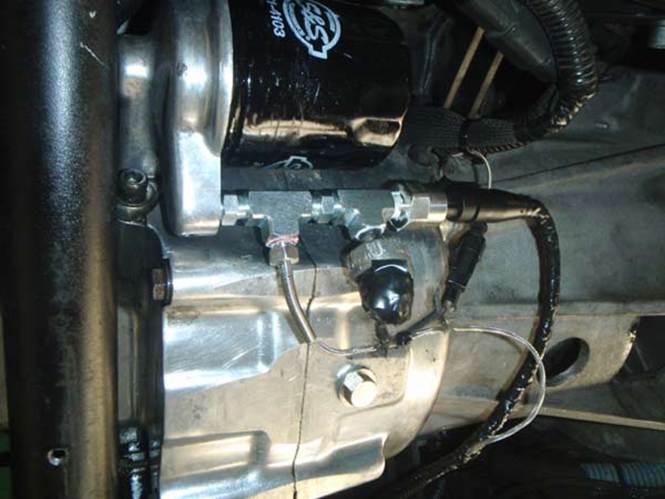
The fitting for engine
oil-pressure ( most right one ) and Engine oil-temperature ( most left one )
with the original pressure switch ( in the middle ). Although I used Tef-Gel as an
electrical anti-seizing compound. Amazon.fr : 61. The earth connection of the
T-pieces to the engine was still OK. That earth-connection is only important
for the existing pressure switch the other sensors are galvanic isolated. The Tef-gel protects the aluminum
a little bit against electrolysis between the aluminum T-pieces and the other
Stainless steel sensors. Tef Gel is also good to use with
the stainless steel Rivets we have on our M3W on the aluminum body to prevent
the typical aluminum rust under the paint at those places. Because you will have to control
this whole sensor construction once in a year at changing oil and/or filter
you can keep a good eye on possible electrolyze between the T-pieces and the
aluminum part of the engine and the other Stainless steel sensors. Disadvantage of this construction I should mention also the
disadvantage of this construction. Because it is a Cul de Sac for the oil, the temperature will rise very
slowly, so you do not have immediately results. That said you will have
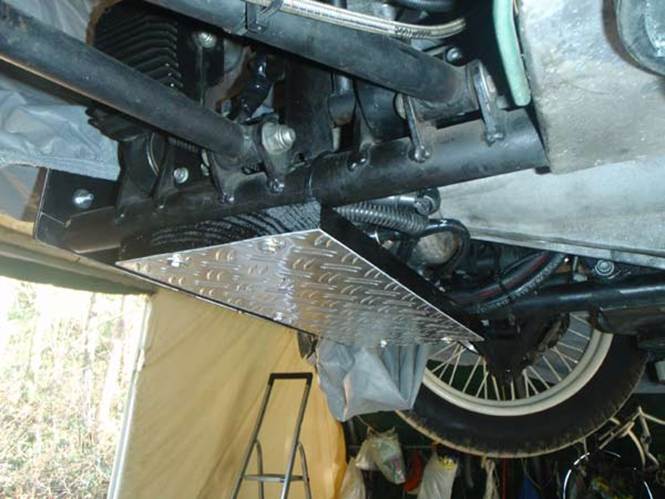
immediately temperature results and very accurate from the CHT sensors. Stone guard The whole connection is covered
by a thick wooden pine-plate and a 3mm thick aluminum plate to protect this
and the sensors, but also protecting the bottom of the engine. On my Honda AT
and more off-road bikes you need a stone protection plate under the aluminum
made engine. Although having one wheel extra
and not in front of the engine, why not here? In France you have very often in
the Pyrenees - where we live - and at entrances of houses and farms a dirt
road where the 4 wheels of a car digs out the side so far that there is
possibly not enough height for the M3W. To protect the engine a stone-guard
is in our situation a preferable thing. The stone guard is 20 cm x 50 cm
x 2,3 cm and Tef-Gel bolted with 5 stainless M6 bolts in the existing frame. The bitumen painted wooden plate
is 2 cm thick and creates also some extra space for the pressure switch by
making a hole in it. Although the
T-pieces-sensor-construction it selves feels very strong the stone guard
gives valuable protection for the T-pieces and their sensors with cables
connected.
You can also see small parts of
the outside grey CAR-cover which I bought for 13 in the ALDI 😉 CHT sensors I bought from Auber US also their
CHT spark-plug sensors. Spark plug sensors or CHT sensors
do give the best information about the actual Cylinder Head Temperature
of each cylinder. You always need two of them with a V-Twin to compare the
two different temperatures. The reason are these motor-bike
V-Twin engine. My Honda AT V-twin has on purpose
with each cylinder a different cooling because one is in front, the other is
in the aft. The different temperature is
created by a different air-fuel mixture for each cylinder. The same with these S&S
traditional bike engines. The M3W Port side cylinder is
original on a bike the far better cooled front cylinder; Starboard side is
the original aft-cylinder. The fuel-mixture in the front
cylinder is different from the aft cylinder, so at the end both cylinder
temperatures do have the same temperature on a bike as it should be. But the M3W is not a bike and the
temperature in both cylinders should be the same, there should be no
difference. So I want to know the exact temperature and find out how you can
change it, like you can do as a pilot in small aero planes. For instance when
the plane rises or descends. For everything on this engine it
is important that both cylinders do have the same temperature. Cylinder Temperature is related
to the explosion push craft down of each piston and think about the imbalance
you create with different temperatures on two cylinders. Seeing the sturdiness how the
S&S engine is build, I am sure it is not a real big issue, but when we
can make it better it prolongs the life of these engines. The delivered spark-plugs sensors
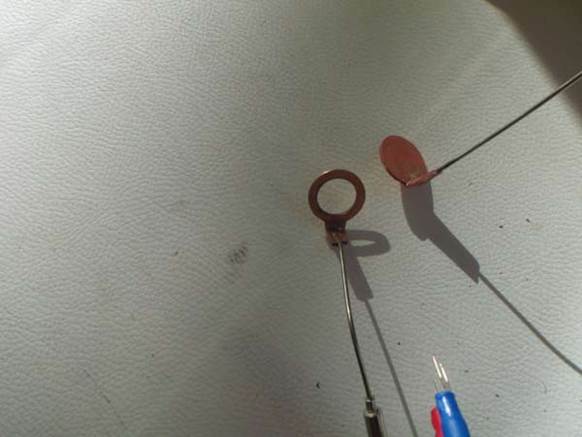
are only in 14mm available. Our spark-plugs are 12mm. So I filled and hard-soldered the
14mm hole with a same thickness copper-plate I had and with a special jewellery-makers saw ( my Partner has one ) I made a 12mm
hole. The connected hard wire to the
copper ring, was very bad soldered, so I had to do this again too. ! also changed the Sparkplugs to
Iridium ones from Amazon.fr - NGK DCPR7EIX : each 14,50
Making 14mm to 12mm CHT sparkplug
sensors CHT Result I found that the max temperature
will be around 170 175 oC. It reacts very well on the power
you use. When the engine is warm, there is
also not much significant temperature difference : 1%. Of course the Port side cylinder
stays always hotter than the Starboard side cylinder. It is arguable if we have to
change the mixture because of this small difference. But knowing the actual Cylinder
Head Temperature when you drive is great for finding other faults. Not on the M3W but in most modern
cars and expensive bikes it is even a very important part of the
ECU-management system. F.I. A bad and different Cylinder
Head Temperature may cause performance issues such as a decrease in power,
acceleration, and fuel economy. The performance issues may be only slightly
noticeable in the beginning, but will get worse as time goes on. Urban Cooling system What is a discussion worth is the
Air-ventilation cooling system designed for low speed. It works perfect on my M3W, but
the moment I stop the engine by turning the ignition key it also stops
directly the cooling fan. The engine temperature will rise which is not good,
when not controlled. On my old VW transporter the
cooling-fan and water-pump stays on for more than a minute regulated by a
thermostat and relays. I will design and make a time
clock with a relay directly on the B+ which keeps the fan on for at least
another 5 minutes, which is no problem for my 40Ah Varta
battery. Another solution is : Wait a
couple of minutes and let the engine cool before you actually turn that
ignition key. That takes discipline and from my
Turbo-charger on my VW T3 diesel I know I have to
do the same but always forget it when I go for filling up the tank at a fuel
station and want/ need to have a break. |
|